Here's a breakdown:
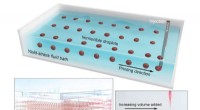
* Diffusion: The movement of molecules from an area of high concentration to an area of low concentration, driven by the concentration gradient.
* Facilitated Diffusion: A type of passive transport where molecules move across a membrane with the help of a transport protein. These proteins act as "helpers" that bind to the molecule and facilitate its passage across the membrane.
Key Points:
* Passive Transport: No energy is required from the cell.
* Specificity: Transport proteins are specific for certain molecules, meaning they only bind to and transport certain types of molecules.
* Down the Concentration Gradient: Facilitated diffusion, like simple diffusion, still moves molecules from an area of high concentration to an area of low concentration.
Example:
Imagine a large, bulky molecule like glucose trying to cross a cell membrane. It's too big to pass through on its own. A glucose transporter protein acts as a channel, binding to the glucose molecule and helping it move across the membrane.
Other Important Points:
* Active Transport: In contrast to facilitated diffusion, active transport requires energy to move molecules against their concentration gradient (from low to high concentration).
* Types of Transport Proteins: There are many different types of transport proteins, each with a specific function. Some act as channels, while others bind to molecules and physically move them across the membrane.
I hope this explanation helps! Let me know if you have any more questions.