* They rely on their host for survival: They don't kill their host (usually) but live inside or on it, extracting nutrients and energy.
* They can be primary, secondary, or tertiary consumers: Depending on the type of parasite and host, they can be feeding on producers (e.g., intestinal worms in herbivores), primary consumers (e.g., tapeworms in carnivores), or even secondary consumers (e.g., parasites on fish that eat smaller fish).
* They can impact trophic levels: Parasites can influence population dynamics of both their host and other species in the food web. For example, by weakening their host, parasites can make them more vulnerable to predators or decrease their reproductive success.
Here's a simple example:
* Producer: Grass
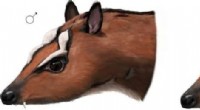
* Primary consumer: A deer
* Parasite: A tick on the deer
In this example, the tick is a secondary consumer because it feeds on the deer, a primary consumer. However, it doesn't directly kill the deer, and its relationship to the deer is much more complex than a simple predator-prey interaction.
Therefore, parasites are often categorized as:
* Exploiters: They exploit their host for resources.
* Trophic modifiers: They can influence the flow of energy and resources in the food web.
Understanding the role of parasites in the food web is crucial for ecological studies, as they play a vital role in regulating populations, influencing biodiversity, and shaping ecosystem dynamics.