Here's a breakdown:
* Ribosomes: These are complex molecular machines found in all living cells. They are responsible for reading the genetic code (mRNA) and translating it into a chain of amino acids, which ultimately forms a protein.
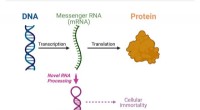
* mRNA (messenger RNA): This molecule carries the genetic instructions from DNA to the ribosome.
* tRNA (transfer RNA): These molecules carry individual amino acids to the ribosome, where they are added to the growing protein chain according to the instructions in the mRNA.
The process of protein synthesis, also known as translation, can be summarized as follows:
1. mRNA carrying the genetic code for a specific protein binds to a ribosome.
2. tRNA molecules, each carrying a specific amino acid, bind to the ribosome according to the mRNA sequence.
3. The ribosome links the amino acids together in the order specified by the mRNA, forming a polypeptide chain.
4. The polypeptide chain then folds into a specific three-dimensional structure, forming the final protein.
So, while DNA contains the blueprint for protein synthesis, it is the ribosome that actually carries out the process of building the protein.