Cellular Respiration
* What it is: The process by which organisms break down glucose (sugar) in the presence of oxygen to release energy in the form of ATP. This energy is used for all life processes.
* Essential for all life: All living organisms, from bacteria to plants to animals, need cellular respiration to survive.
* Does not require photosynthesis: Cellular respiration can occur independently of photosynthesis.
Photosynthesis
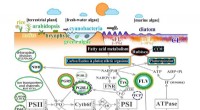
* What it is: The process by which plants, algae, and some bacteria use sunlight, water, and carbon dioxide to create glucose (sugar) and oxygen.
* Essential for producing food: Photosynthesis is the primary way organisms create the organic molecules that fuel cellular respiration.
* Not required for cellular respiration: While photosynthesis produces the fuel for cellular respiration, it is not directly needed for the process to occur.
In summary:
* An organism can carry out cellular respiration without photosynthesis. This is the case for animals, fungi, and many bacteria that obtain their energy from consuming other organisms.
* Organisms cannot carry out photosynthesis without cellular respiration. Photosynthesis creates glucose, which is then broken down through cellular respiration to release energy.
Think of it like this:
* Photosynthesis is like building a house (creating glucose).
* Cellular respiration is like using the house (breaking down glucose for energy).
You can use a house without building it yourself, but you can't build a house without using tools and materials.