Here's why:
* Defining a Cell: The plasma membrane is the outer boundary of a cell, separating the internal environment from the external one. It controls what enters and leaves the cell, which is crucial for all cellular functions. Without a membrane, a cell wouldn't exist as a distinct entity.
* Other Organelles: While other organelles are important for specific functions, a cell could theoretically survive, at least for a short time, without some of them. For example, a cell without ribosomes wouldn't be able to make proteins, but it could still potentially utilize existing proteins.
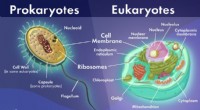
* Prokaryotic Cells: Prokaryotic cells, like bacteria, lack many of the complex organelles found in eukaryotic cells. They only have a plasma membrane, ribosomes, and DNA. This demonstrates that the plasma membrane is the fundamental structure needed for a cell to function as a basic unit of life.
Important Note: While the plasma membrane is the only truly essential organelle, other organelles are vital for the cell's long-term survival and proper functioning.