Here's a breakdown of the differences between sugars and bases in DNA and RNA:
Sugars:
* DNA: Contains deoxyribose sugar. "Deoxy" means it lacks an oxygen atom at the 2' carbon position compared to ribose. This makes DNA more stable than RNA.
* RNA: Contains ribose sugar. Has an -OH group at the 2' carbon position, which makes it more reactive and less stable than deoxyribose.
Bases:
* Both DNA and RNA: Contain adenine (A), guanine (G), and cytosine (C). These are called purines.
* DNA: Contains thymine (T) as the fourth base.
* RNA: Contains uracil (U) instead of thymine.
Key Differences:
* Sugar: DNA uses deoxyribose, RNA uses ribose.
* Base: DNA uses thymine, RNA uses uracil.
Other important points:
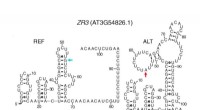
* Structure: The differences in sugar structure affect the overall shape and stability of the molecule. DNA forms a double helix, while RNA is typically single-stranded, although it can fold into complex structures.
* Function: The differences in sugar and base composition contribute to the different functions of DNA and RNA. DNA primarily stores genetic information, while RNA plays a role in gene expression (transcribing DNA into proteins).
Here's a simple table summarizing the key differences:
| Feature | DNA | RNA |
|---|---|---|
| Sugar | Deoxyribose | Ribose |
| Bases | Adenine, Guanine, Cytosine, Thymine | Adenine, Guanine, Cytosine, Uracil |
| Structure | Double helix | Single-stranded (can fold into complex structures) |
| Function | Genetic information storage | Gene expression |
Let me know if you'd like a more detailed explanation of any of these points!