Observation and Data Collection:
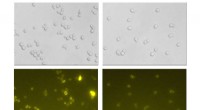
* Microscopes: Used to view extremely small objects, like cells and bacteria.
* Telescopes: Used to observe distant objects in space.
* Spectrometers: Analyze light to determine the composition of materials.
* Sensors: Used to measure various environmental factors like temperature, pressure, and humidity.
* Satellites: Collect data from space, providing valuable information about the Earth and other planets.
* Field notebooks and cameras: Used to record observations and collect data in the field.
* Survey equipment: Used to measure distances and angles in geography, archaeology, and other fields.
Experimentation and Analysis:
* Laboratory equipment: This includes glassware, beakers, flasks, ovens, centrifuges, and many other tools used to conduct experiments and manipulate materials.
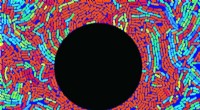
* Computer simulations and modeling: Used to predict and analyze complex phenomena, like weather patterns or the behavior of molecules.
* Statistical software: Used to analyze data, identify trends, and draw conclusions.
* Analytical instruments: Such as chromatography systems, mass spectrometers, and X-ray diffractometers, which analyze the chemical composition and structure of materials.
* Scientific databases: Provide access to vast amounts of information, including scientific literature, genetic sequences, and other data.
Communication and Collaboration:
* Scientific journals: Provide a platform for scientists to publish their research findings and share their work with the scientific community.
* Conferences and workshops: Offer opportunities for scientists to present their work and engage in discussions with colleagues.
* Online platforms: Provide tools for collaboration, data sharing, and scientific communication.
Other Important Tools:
* Computers: Used for data analysis, modeling, communication, and many other tasks.
* Software: Specialized software programs are used for everything from data analysis to molecular modeling.
* Mathematical tools: Scientists rely heavily on mathematics to analyze data, create models, and interpret results.
* Critical thinking and problem-solving skills: These are essential for designing experiments, interpreting data, and drawing conclusions.
The tools a scientist uses will vary greatly depending on their specific field of study. For example, a physicist may use a particle accelerator, while a biologist may use a gene sequencer. However, all scientists use a combination of tools to observe, experiment, analyze, and communicate their findings.