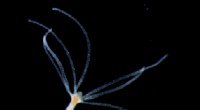
1. Bud Formation: A small outgrowth, or bud, appears on the body wall of the hydra. This bud contains a portion of the hydra's gastrovascular cavity and tissues.
2. Bud Development: The bud continues to grow and develop, forming a miniature version of the parent hydra. This includes the development of tentacles, a mouth, and a basal disc for attachment.
3. Bud Separation: Once the bud has matured, it detaches from the parent hydra and becomes an independent individual.
4. Independent Life: The newly formed hydra is genetically identical to the parent and can begin to feed and reproduce on its own.
Advantages of Asexual Reproduction in Hydras:
* Rapid Reproduction: Budding allows hydras to quickly increase their population size.
* No Need for a Mate: Asexual reproduction eliminates the need to find a mate, making it an efficient method of reproduction, especially in stable environments.
* Genetic Continuity: The offspring are genetically identical to the parent, ensuring the perpetuation of successful traits.
Overall, budding is a highly effective means of reproduction for hydras, allowing them to thrive and colonize new areas quickly.