Squamous Epithelial Cells:
* Epithelial cells are cells that line the surfaces of your body, forming a protective barrier.
* Squamous means "flat" or "scale-like."
* Squamous epithelial cells are thin, flat cells that form a smooth, continuous surface. They're found in places like:
* Skin: The outer layer of your skin is made of squamous cells.
* Mouth: The lining of your mouth.
* Esophagus: The tube that carries food from your mouth to your stomach.
* Vagina: The lining of the vagina.
Trichomonas:
* Trichomonas vaginalis is a microscopic, single-celled parasite that can cause a sexually transmitted infection (STI) called trichomoniasis.
* It's found in the vagina and urethra of women, and the urethra of men.
* Symptoms in women can include vaginal discharge, itching, and burning. In men, it often causes no symptoms.
Spermatozoa:
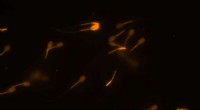
* Spermatozoa are sperm cells, the male reproductive cells.
* They're produced in the testes and are responsible for fertilizing the egg.
* Spermatozoa are microscopic and have a distinct, tadpole-like shape with a head, midpiece, and tail.
How They Relate:
* Squamous epithelial cells are often found in vaginal swabs, which are used to diagnose infections.
* Trichomonas may be present in vaginal swabs, and its presence can be identified by a microscopic examination.
* Spermatozoa can also be present in vaginal swabs, especially in women who are sexually active.
Important Notes:
* Finding squamous epithelial cells, Trichomonas, or spermatozoa in a vaginal swab doesn't necessarily mean there's a problem.
* A healthcare professional will interpret these findings in the context of a patient's symptoms and medical history to make a diagnosis.
Let me know if you have any other questions!