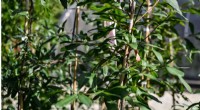
Glabrous leaves are smooth, hairless leaves. This lack of trichomes (hair-like structures) offers several advantages:
1. Reduced Water Loss:
* Decreased Transpiration: Glabrous leaves have a lower surface area for water evaporation, resulting in reduced transpiration rates. This is especially beneficial in arid or semi-arid environments where water conservation is crucial.
2. Improved Photosynthesis:
* Increased Light Absorption: The smooth surface allows for better light penetration and absorption, leading to increased photosynthetic activity. This is crucial for maximizing energy production in plants.
3. Reduced Pest and Disease Resistance:
* Defense against Pests: The smooth surface makes it harder for insects and other pests to cling to the leaf, hindering their ability to feed and lay eggs.
* Disease Prevention: Glabrous leaves can be more resistant to fungal and bacterial diseases, as the absence of trichomes prevents spores and bacteria from easily attaching and infecting the plant.
4. Enhanced Wind Resistance:
* Reduced Wind Stress: The smooth surface reduces wind resistance, preventing damage to the leaves and promoting overall plant stability.
5. Improved Heat Dissipation:
* Reduced Heat Absorption: The smooth surface reflects more sunlight, reducing the amount of heat absorbed by the leaf, which can prevent overheating and damage.
6. Improved Nutrient Uptake:
* Increased Nutrient Absorption: The smooth surface can facilitate the absorption of nutrients from the air and rain, as there are no trichomes to hinder the process.
7. Enhanced Gas Exchange:
* Improved CO2 Uptake: Glabrous leaves have larger stomata (pores) which can take in more carbon dioxide, leading to increased photosynthetic activity and growth.
However, it's important to note that:
* Glabrous leaves are not always advantageous. In some environments, hairy leaves can provide protection from strong sunlight, frost, or even herbivores.
* The presence or absence of trichomes is dependent on the plant species and its evolutionary history.
* Environmental factors play a significant role in shaping leaf morphology and adaptations.
Overall, glabrous leaves offer a variety of advantages that enhance plant survival and growth in various conditions. They are especially beneficial in environments where water conservation, pest resistance, and heat dissipation are crucial factors.