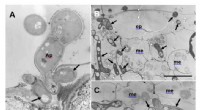
* Cell Wall: This is a rigid outer layer that provides structural support and protection for the bacterial cell. It's made of peptidoglycan, a unique molecule found only in bacteria. The cell wall is crucial for maintaining the cell's shape, preventing bursting from internal pressure, and acting as a barrier against the environment.
* Cell Membrane (Plasma Membrane): This is a thin, flexible layer that surrounds the cytoplasm of the bacterial cell. It's composed of a phospholipid bilayer and is responsible for regulating the movement of substances in and out of the cell. The cell membrane plays a critical role in nutrient uptake, waste removal, and maintaining the cell's internal environment.
Key differences between the cell wall and membrane:
* Composition: The cell wall is made of peptidoglycan, while the cell membrane is made of phospholipids.
* Function: The cell wall provides structural support and protection, while the cell membrane regulates transport and maintains the cell's internal environment.
* Location: The cell wall is located outside the cell membrane.
The presence of both a cell wall and a cell membrane is a defining characteristic of bacterial cells. These structures are essential for their survival and play vital roles in their growth, metabolism, and interactions with their environment.