Here are some key aspects of biological unity:
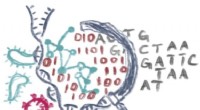
* Universal Genetic Code: All organisms use the same basic genetic code (DNA and RNA) to store and transmit genetic information. This suggests a common ancestor and demonstrates the underlying unity of life.
* Cellular Structure: All living things are made up of cells, the fundamental building blocks of life. Even though cells can be incredibly diverse in structure and function, they all share basic features like a cell membrane, cytoplasm, and ribosomes.
* Metabolic Processes: Similar biochemical processes occur in all living organisms. For example, all organisms use glucose for energy production, and all organisms use enzymes to catalyze chemical reactions.
* Evolutionary History: All life on Earth evolved from a single common ancestor. This means that we are all related, and our shared ancestry is reflected in our similarities.
* Homeostasis: All living organisms maintain a stable internal environment despite external changes. This is essential for survival and shows the fundamental unity of life.
Understanding the unity of life is crucial for studying biology. It helps us to:
* Make connections: We can apply knowledge from one organism to another, making it easier to understand the diversity of life.
* Develop new technologies: By understanding the fundamental processes of life, we can develop new therapies and technologies, such as gene editing and bioengineering.
* Appreciate the interconnectedness of life: We can better understand the interconnectedness of all living things and the importance of preserving biodiversity.
The concept of unity in biology emphasizes the remarkable interconnectedness of life on Earth and serves as a foundation for the study of all living organisms.