1. Evidence for Evolutionary Relationships:
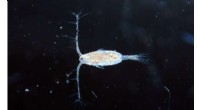
* Shared Ancestry: The presence of trochophore larvae in diverse groups like annelids, molluscs, and some other phyla is a strong indication of their shared ancestry. This suggests that a common ancestor of these phyla possessed this larval stage, and it has been retained or modified in various descendant lineages.
* Phylogeny: Comparing the trochophore morphology across different groups helps reconstruct the evolutionary relationships among these phyla.
2. Adaptations for Dispersal and Survival:
* Dispersal: The trochophore's ciliated bands allow it to actively swim and disperse, facilitating colonization of new habitats. This is crucial for expanding populations and avoiding competition in the original location.
* Survival: The trochophore's specific adaptations like ciliary bands for feeding and the presence of a shell in some cases, enhance its survival in the pelagic environment.
3. Evolutionary Diversification:
* Modified Larval Stages: Trochophores have evolved into different forms in various lineages, with some modifications in size, shape, and structures. These adaptations are likely linked to specific environmental pressures and the ecological niches they occupy.
* Direct Development: In some groups, the trochophore larva has been completely eliminated, leading to direct development from egg to juvenile, bypassing the larval stage. This might be related to specialized habitats or reduced dispersal needs.
4. Limitations and Challenges:
* Vulnerability: The pelagic environment exposes trochophore larvae to predation and environmental changes. This makes them highly vulnerable, and their survival depends on various factors like water currents and predator presence.
* Evolutionary Constraints: While the trochophore is a successful adaptation, it also presents certain limitations. Its reliance on specific environmental conditions might restrict the evolution of certain traits or adaptations.
Overall, the trochophore is a testament to the power of evolutionary processes. Its presence across diverse lineages highlights shared ancestry and evolutionary relationships. Its adaptations for dispersal and survival showcase the importance of environmental pressures in shaping life history strategies. The modifications and even elimination of the trochophore stage in certain lineages demonstrate the adaptability and diversity of life on Earth.