* Lack of a nucleus: Both Archaea and Bacteria lack a membrane-bound nucleus, which houses their genetic material (DNA).
* Simple cell structure: Both are single-celled organisms with relatively simple internal structures compared to eukaryotic cells.
* Size: Both Archaea and Bacteria are generally small in size, typically only a few micrometers in diameter.
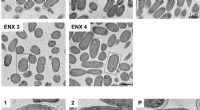
* Similar appearance under a microscope: Under a microscope, both types of cells appear very similar, lacking the complex internal structures seen in eukaryotes.
However, advancements in molecular biology, particularly the analysis of ribosomal RNA (rRNA), revealed significant differences between Archaea and Bacteria. These differences led to the reclassification of Archaea as a separate domain of life:
* Distinct rRNA sequences: Archaea have a unique rRNA sequence that is significantly different from Bacteria, indicating a deeper evolutionary divergence.
* Different cell wall composition: The cell walls of Archaea are composed of different molecules than bacterial cell walls.
* Distinct metabolic pathways: Archaea have unique metabolic pathways that are not found in Bacteria, including the ability to thrive in extreme environments.
This molecular evidence ultimately led to the three-domain system of classification, which separates life into Bacteria, Archaea, and Eukarya.