1. Transcription:
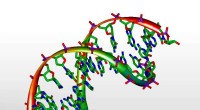
* DNA to RNA: DNA contains the genetic code for making proteins, but it stays safely tucked away in the nucleus of the cell. To access this code, the cell first transcribes it into a messenger RNA (mRNA) molecule. This process is carried out by an enzyme called RNA polymerase.
* RNA polymerase binds to a specific region of the DNA called the promoter and unwinds the DNA double helix. It then reads the DNA sequence and uses it as a template to build a complementary mRNA molecule.
* The mRNA molecule is a single-stranded copy of the DNA sequence, but it contains uracil (U) instead of thymine (T).
* Once the mRNA is complete, it detaches from the DNA and travels out of the nucleus into the cytoplasm.
2. Translation:
* RNA to protein: In the cytoplasm, the mRNA molecule encounters ribosomes, which are complex molecular machines that translate the genetic code into a protein.
* The mRNA molecule is fed through the ribosome, three bases at a time. These three-base units are called codons.
* Each codon corresponds to a specific amino acid.
* Transfer RNA (tRNA) molecules, which carry specific amino acids, recognize the codons in the mRNA and deliver the corresponding amino acid to the ribosome.
* The ribosome links the amino acids together in a chain, following the sequence of codons in the mRNA.
* The resulting chain of amino acids folds into a three-dimensional structure, forming the functional protein.
Here's a simple analogy:
Imagine DNA is a blueprint for building a house, mRNA is a copy of the blueprint taken to the construction site, and the ribosomes are the construction workers building the house using the instructions from the copy.
In summary:
* DNA contains the genetic code for proteins.
* Transcription copies the DNA code into mRNA.
* Translation uses mRNA to direct the synthesis of a protein by linking amino acids together.