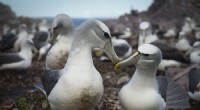
1. Variation: Organisms within a population exhibit variations in their traits, which are determined by their genotype. These variations can be small, like slightly different beak shapes in birds, or more significant, like different fur colors in mammals.
2. Environmental Pressure: The environment presents challenges to survival and reproduction. These challenges can be things like predation, competition for resources, disease, or climate change.
3. Differential Survival and Reproduction: Individuals with phenotypes that are better suited to the environment are more likely to survive and reproduce. For example, a bird with a beak shape better suited to cracking open seeds will be more successful in a habitat where those seeds are the main food source.
4. Inheritance: The traits that give individuals an advantage are often heritable. This means that the offspring of those successful individuals are more likely to inherit those advantageous traits.
5. Evolution: Over many generations, the frequency of the advantageous traits increases within the population. This change in the genetic makeup of the population over time is known as evolution.
Here's a simple example:
Imagine a population of rabbits living in a forest. Some rabbits have white fur, some have brown fur, and some have black fur. If the forest environment is dominated by green vegetation, the brown rabbits will be better camouflaged from predators. This means the brown rabbits will be more likely to survive and reproduce. Over time, the population of rabbits will have a higher proportion of brown rabbits.
Key Points:
* Natural selection doesn't create new traits. It acts on existing variations within a population.
* Natural selection is not a conscious process. It's a consequence of the interaction between organisms and their environment.
* The "fitness" of a trait is relative to the environment. A trait that is advantageous in one environment might be disadvantageous in another.
In conclusion, natural selection acts on the phenotype of an organism by favoring those individuals with traits that provide a survival and reproductive advantage in a given environment. Over time, this leads to changes in the genetic makeup of a population, driving the process of evolution.