* Taxonomic data: This includes information about different species, their characteristics, and their relationships to each other.
* Biological databases: These are vast collections of information about organisms, including their DNA sequences, morphology, and ecological data.
* Machine learning algorithms: These allow me to analyze patterns and relationships in data, helping me to identify and group organisms based on various characteristics.
Here's how I can help with identifying and grouping organisms:
* Describing characteristics: Based on your input (e.g., "a small, furry creature with a long tail"), I can provide you with a list of potential organisms that match the description.
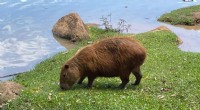
* Analyzing images: I can analyze images of organisms and identify potential species based on their visual features.
* Classifying based on DNA: Given a DNA sequence, I can help identify the species it belongs to or its phylogenetic relationship to other organisms.
* Creating phylogenetic trees: I can generate phylogenetic trees based on genetic or morphological data, illustrating the evolutionary relationships between organisms.
* Providing information about specific organisms: I can provide information about a specific organism's habitat, diet, life cycle, and other relevant details.
However, it's important to remember that I'm not a replacement for actual scientific tools or experts. If you need a definitive identification or classification, you should consult with a qualified biologist or use specialized tools and resources.