Here's a breakdown of the process:
1. Light-Dependent Reactions:
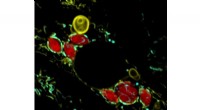
* Sunlight is absorbed by chlorophyll, a green pigment found in chloroplasts (organelles within plant cells).
* This light energy is used to split water molecules (H₂O) into oxygen (O₂), which is released into the atmosphere, and hydrogen ions (H+).
* The light energy is also used to convert ADP (adenosine diphosphate) into ATP (adenosine triphosphate), which is the cell's energy currency.
2. Light-Independent Reactions (Calvin Cycle):
* The hydrogen ions (H+) produced in the light-dependent reactions, along with carbon dioxide (CO₂) from the air, are used to create glucose (C₆H₁₂O₆).
* This process requires ATP as an energy source.
* The glucose produced is used for the plant's growth, development, and other metabolic processes.
In summary, photosynthesis is a crucial process that:
* Converts light energy into chemical energy.
* Produces glucose, the plant's food source.
* Releases oxygen into the atmosphere, essential for animal life.
* Plays a vital role in the Earth's carbon cycle.
It's a fascinating and complex process that underpins the entire food chain and helps sustain life on Earth.