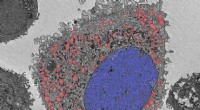
* High Resolution: TEMs provide the highest resolution imaging available, allowing scientists to visualize structures at the nanometer scale. This is essential for studying the intricate details of protein molecules.
* Thin Samples: TEM requires thin samples (usually sliced or specially prepared) to allow electrons to pass through. This is suitable for studying cell surfaces.
* Internal Structure: TEM can reveal the internal structures of cells, including the arrangement of proteins on the cell membrane.
* Electron Density: TEM utilizes the interaction of electrons with the sample, highlighting areas of varying electron density. This can help differentiate protein molecules from other cellular components.
While other tools might be used in conjunction with TEM, it's the primary choice for detailed studies of protein molecules on cell surfaces.
Here are other tools that might be used in this research, but not as the primary tool:
* Scanning Electron Microscope (SEM): SEM provides a 3D surface view but with lower resolution than TEM. It's useful for visualizing cell surface features but not the fine details of protein structures.
* Atomic Force Microscopy (AFM): AFM can be used to image the surface of cells and even individual proteins. It offers higher resolution than SEM but not as high as TEM.
* X-ray Crystallography: This technique can be used to determine the 3D structure of proteins at atomic resolution but requires a pure sample of the protein.
Ultimately, the best tool depends on the specific research question and the desired level of detail.