1. The Vertebrate Skull:
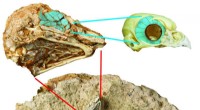
* Homology: All vertebrates have a skull, though the specific shapes and sizes vary dramatically between groups (fish, amphibians, reptiles, birds, mammals). This common ancestry is reflected in the shared skeletal elements that make up the skull, even if those elements are modified for different functions. For example, the jawbone of a mammal is homologous to the hyoid bone in a fish, even though they serve completely different functions.
2. Teeth:
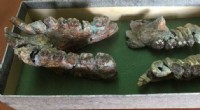
* Homology: While not all vertebrates have teeth, the presence of teeth in mammals, reptiles, and some fish indicates a common ancestor. Even the different types of teeth (incisors, canines, premolars, molars) can be traced to a shared evolutionary origin.
3. Internal Organs:
* Homology: Many internal organs are homologous across vertebrates. For example, the kidneys, liver, heart, and lungs are all present in various forms in different vertebrate groups, even if they function slightly differently.
4. Sensory Organs:
* Homology: Eyes are a classic example of a homologous structure. While the eyes of vertebrates vary greatly in complexity and function, their underlying structure, with a lens, retina, and optic nerve, is remarkably similar across different groups.
5. Reproductive Organs:
* Homology: The basic structure of reproductive organs, such as the gonads (testes and ovaries), can be traced back to a common ancestor.
Important Note: It's crucial to understand that homology is not about identical structures. Homologous structures are similar because they share a common evolutionary origin, even if they have been modified over time for different purposes. This is a key concept in understanding evolutionary relationships between different species.