Here's how it works:
* Catalase is an enzyme that breaks down hydrogen peroxide into water (H₂O) and oxygen (O₂).
* When hydrogen peroxide is added to a sample containing catalase, the enzyme will catalyze the breakdown of the hydrogen peroxide, producing bubbles of oxygen gas.
* The presence of bubbles indicates the presence of catalase.
Procedure:
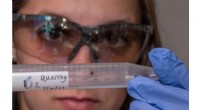
1. Place a small amount of the sample (e.g., a piece of potato, a drop of blood) in a test tube.
2. Add a few drops of hydrogen peroxide to the sample.
3. Observe for the formation of bubbles. If bubbles appear, it indicates the presence of catalase.
Note:
* The reaction can be accelerated by using a slightly warmed hydrogen peroxide solution.
* Other factors that can affect the reaction rate include pH and temperature.