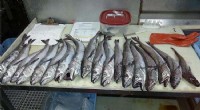
Water Lily Fish (Scientific Name: *Nymphaea*)
Water lilies are plants, not animals, and they don't have cells like fish or paramecium. They have plant cells with distinct features like:
* Chloroplasts: These organelles contain chlorophyll, allowing the plant to perform photosynthesis.
* Large Vacuole: A central storage space for water and other nutrients.
* Cell Wall: A rigid outer layer that provides structural support.
Paramecium (Single-Celled Organism)
Paramecium are single-celled organisms classified as protists. They are much simpler than plants or animals but have essential functions for survival:
* Cilia: Hair-like structures that beat rhythmically to propel the paramecium through water.
* Contractile Vacuole: Pumps excess water out of the cell to maintain osmotic balance.
* Oral Groove: A funnel-like structure that helps the paramecium capture and ingest food.
* Nucleus: Contains the genetic material (DNA) of the cell.
Water Lily Fish and Paramecium: Comparison
It's important to remember that water lily fish (which are actually fish) and paramecium are very different organisms with distinct cellular structures and functions:
* Fish: Multicellular organisms with specialized cells forming tissues and organs. They have a complex nervous system, a circulatory system, and a digestive system.
* Paramecium: Single-celled organisms with basic structures for movement, feeding, and excretion.
Let me know if you'd like to delve deeper into specific functions within either fish or paramecium cells!