1. The Players:
* Sodium ions (Na+): These are more concentrated outside the cell.
* Potassium ions (K+): These are more concentrated inside the cell.
* Phospholipid bilayer: The cell membrane, which is selectively permeable, meaning it controls what goes in and out.
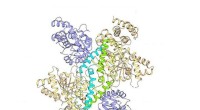
* Sodium-Potassium pump: A protein embedded in the membrane that actively pumps 3 Na+ ions out of the cell for every 2 K+ ions pumped in.
2. The Process:
* Sodium-Potassium Pump: The pump uses energy (ATP) to maintain the concentration gradient of Na+ and K+ ions. This creates a state where the inside of the cell is more negative and the outside is more positive.
* Passive Diffusion: Some Na+ ions can leak back into the cell through passive diffusion, moving from a higher concentration outside to a lower concentration inside. This makes the inside less negative and the outside less positive.
* Ion Channels: Specific channels in the membrane allow for the movement of other ions, such as chloride (Cl-) ions, which are more concentrated outside the cell. When these channels open, they allow Cl- to move into the cell, further contributing to the negative charge inside.
3. The Result:
The combination of these processes creates a resting membrane potential, which is the electrical potential difference across the cell membrane in a resting state. This potential difference is typically around -70mV, meaning the inside of the cell is 70mV more negative than the outside.
4. Importance:
The electrochemical gradient and the resulting membrane potential are crucial for various cellular processes:
* Nerve impulses: The movement of ions across the membrane is responsible for nerve impulses.
* Muscle contractions: The electrochemical gradient is essential for muscle contraction.
* Cell signaling: The electrochemical gradient plays a role in cell communication.
In summary: The cell membrane becomes more positive outside and negative inside due to the combined actions of the sodium-potassium pump, passive diffusion, and ion channels, which create and maintain an electrochemical gradient across the membrane. This gradient is essential for many cellular processes and ultimately contributes to the cell's ability to function.