Here's why:
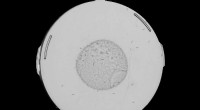
* Eukaryotic cells are complex cells that contain a membrane-bound nucleus and other organelles. This means their genetic material (DNA) is enclosed within the nucleus.
* Prokaryotic cells, on the other hand, are simpler cells that lack a nucleus and other membrane-bound organelles. Their DNA is located in a region called the nucleoid, but it's not enclosed by a membrane.
Therefore, any single-celled organism with a nucleus is classified as a eukaryotic organism. Examples include:
* Protists: This group includes amoebas, paramecia, and algae.
* Fungi: Yeast is a single-celled fungus.
* Some bacteria: While most bacteria are prokaryotic, there are a few exceptions that have a nucleus.