1. Size: This refers to the total number of individuals in a population. It can be influenced by factors like birth rates, death rates, immigration, and emigration.
2. Density: This refers to the number of individuals per unit area or volume. It's a measure of how crowded or dispersed a population is.
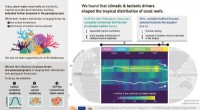
3. Distribution: This refers to the spatial arrangement of individuals within a population. It can be described as random, uniform, or clumped.
These three characteristics are interconnected and influence each other. For example, a population's size can affect its density, and its distribution can affect its interactions with the environment.