For general viewing and basic structures:
* Light Microscopes: These are the most common type. They use visible light to illuminate the sample and magnify it through a series of lenses. They can magnify up to 1000x, allowing you to see the basic shape and some internal structures of cells.
* Stereo Microscopes (Dissecting Microscopes): These are useful for examining larger specimens like insects or plant tissues, as they provide a three-dimensional view. They typically have a lower magnification than compound microscopes.
For viewing finer details and internal structures:
* Electron Microscopes: These use a beam of electrons to create images, offering much higher resolution than light microscopes. This allows for detailed observation of internal cell structures, such as organelles, and even individual molecules.
* Transmission Electron Microscope (TEM): This type shines a beam of electrons through a very thin slice of the specimen, creating a two-dimensional image. It reveals the internal structure of cells in great detail.
* Scanning Electron Microscope (SEM): This type scans a focused beam of electrons across the surface of a specimen, creating a three-dimensional image of the surface. It is ideal for observing the external features and textures of cells.
Other tools for specific needs:
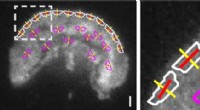
* Fluorescence Microscopy: This technique uses fluorescent dyes that bind to specific molecules or structures within the cell. When illuminated with a specific wavelength of light, these dyes emit light of a different wavelength, allowing researchers to visualize specific components of the cell.
* Confocal Microscopy: This is a type of fluorescence microscopy that uses lasers to scan a specimen, creating a series of optical sections. These sections can be combined to create a three-dimensional image of the cell, providing more detailed information than traditional fluorescence microscopy.
The choice of microscope depends on the size of the cell, the level of detail required, and the specific research question.