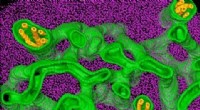
* Energy Production: Just like a kitchen provides food and energy for a household, mitochondria are the powerhouses of the cell. They break down nutrients (like sugars) and convert them into usable energy in the form of ATP (adenosine triphosphate). This energy fuels all the cell's activities, from muscle contraction to protein synthesis.
* Fuel Processing: Mitochondria take in the "ingredients" (nutrients) and process them through a series of chemical reactions called cellular respiration. This is similar to a kitchen taking raw ingredients and transforming them into cooked meals.
* Waste Management: Like a kitchen that produces waste, mitochondria also generate byproducts, such as carbon dioxide and water, during energy production. These byproducts are then removed from the cell.
Here's a more detailed explanation:
1. Intake: Mitochondria receive fuel from the cell's cytoplasm, mainly in the form of glucose (sugar).
2. Breakdown: Inside the mitochondria, glucose is broken down through a complex process called the Krebs cycle and the electron transport chain. This process releases electrons that fuel the production of ATP.
3. Energy Output: ATP is the cell's primary energy currency. It powers various cellular functions, including:
* Muscle contraction: Allows us to move.
* Protein synthesis: Builds new proteins for growth and repair.
* Signal transduction: Allows cells to communicate with each other.
* Active transport: Moves molecules across cell membranes.
Important Note: While the "kitchen" analogy is helpful, it's important to remember that mitochondria are much more complex than a simple kitchen. They have their own DNA, ribosomes, and can even reproduce independently within the cell.
Let me know if you'd like to learn more about the processes happening inside the mitochondria!