Internal Order:
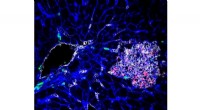
* Organization: Organisms are highly organized, with specialized cells forming tissues, tissues forming organs, and organs forming organ systems. This intricate structure is vital for function.
* Homeostasis: Organisms maintain a stable internal environment, despite external fluctuations. This involves regulating temperature, pH, blood sugar, etc.
* Complexity: Life exhibits a remarkable level of complexity. From the molecular level to the ecosystem level, organisms display intricate interactions and processes.
External Order:
* Adaptation: Organisms evolve to fit their environment, displaying features that optimize survival and reproduction. This can manifest in physical characteristics, behaviors, and life cycles.
* Ecosystem Interactions: Organisms interact with each other and their environment in complex ways, forming food webs and other ecological relationships that contribute to a degree of order.
* Succession: Over time, ecosystems undergo changes, transitioning through stages of increasing complexity and stability.
It's important to note:
* "Degree" is subjective and difficult to quantify. There isn't a single scale to measure the "order" of an organism.
* Order is not static. Organisms constantly adjust and adapt to internal and external changes.
* The concept of order is also linked to the second law of thermodynamics, which states that entropy (disorder) tends to increase in isolated systems. Organisms maintain their order by utilizing energy, essentially "fighting" against this tendency.
Instead of "degree," we might consider:
* Complexity: How intricate and elaborate is the organism's structure and function?
* Stability: How well can the organism maintain its internal order and adapt to external changes?
* Fitness: How well is the organism adapted to its environment, allowing for survival and reproduction?
By focusing on these aspects, we can gain a more nuanced understanding of the organization and order in living systems.