Universal Characteristics of Bacteria:
* Prokaryotic: They lack a true nucleus and other membrane-bound organelles found in eukaryotic cells.
* Unicellular: They are single-celled organisms.
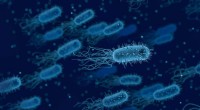
* Microscopic: They are generally too small to be seen with the naked eye.
* Diverse Metabolism: Bacteria exhibit a vast array of metabolic pathways, from photosynthesis to chemosynthesis, allowing them to thrive in diverse environments.
* Reproduce Asexually: They primarily reproduce through binary fission, a process where a single cell splits into two identical daughter cells.
* Ubiquitous: They are found in virtually every environment on Earth, including soil, water, air, and the bodies of plants and animals.
Important Note: While these characteristics describe all bacteria, there is enormous diversity within the bacterial world. They vary in size, shape, metabolism, and their relationship with other organisms.
To understand the full scope of bacteria, it's essential to consider the vast diversity within this kingdom.