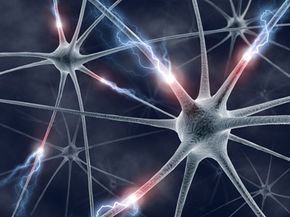
The human brain is a knot of 100 billion neurons and support cells. We can store a lifetime of memories there. We can use it to write sonnets and build airplanes. Sure, an elephant's brain is larger, weighs more, and has more neurons, but elephants also lack our abilities. Intrigued? Scientists sure are. That's one reason why they are mapping the human brain, a substantial project that could take decades to complete.
Brain mapping attempts to relate the brain's structure to its function, or finding what parts give us certain abilities. For example, what aspect of our brain allows us to be creative or logical? This is called localization of function.
In mapping brain functions, scientists use imaging to watch the brain working on various tasks. Charles Wilson, a neurobiologist at the University of Texas at San Antonio, explains localization of function this way:
There's part of the brain that has to do primarily with vision and other parts that have to do primarily with sound. Now, can we look in the vision section and say, Is there a special part of the brain that detects red objects and another that detects green objects? Or does the same area detect objects of both colors?Brain mapping also looks from the outside in. It examines how our environment changes our brain's structure by studying, for instance, how the brain changes physically through the learning and aging processes. Brain mapping also examines what goes wrong physically in the brain during mental illnesses and other brain diseases.
Finally, brain mapping aims to give us a thorough picture of our brain's structure. Google Earth shows us satellite images of our planet and zooms in to continents, countries, states, cities, highways, streets and buildings. A complete structural map of our brain might be similar. It could show us our whole brain; all the regions, functional lobes, specialized centers, thick neuron "bundles" connecting brain parts, neuron circuits, single neurons, junctions between neurons and finally, neuron parts. Scientists are still developing the parts that might form this massive map.
Brain mapping is a collection of many different tools. Researchers must collect images of the brain, turn those images into data, and then use that data to analyze what happens in the brain as it develops.
Read on to learn how researchers map the brain.
Contents We've come a long way from this.
Mark Strozier/©istockphoto.com
We've come a long way from this.
Mark Strozier/©istockphoto.com
Scientists use many methods to study the brain's structure and function. They take pictures of healthy brains and compare them to diseased brains. In addition, they examine brains taken from humans, primates and small mammals and try to understand how invertebrates' smaller nervous systems work. On a microscopic level, they also examine neurons.
Here are some tools used in brain mapping. These techniques take images of the brain:
These techniques examine brain activity:
New methods allow researchers to see all the connections between neurons in an intact brain. This branch of study is called connectomics. The "wiring diagram" of a brain is called a connectome [source: Lichtman]. "Until recently, we've had no hope of getting these wiring diagrams," says Jeff Lichtman, a Harvard biologist who led the group that developed some of the new techniques. "We could see individual cells, but never all of them at once."
 Brainbow labeled the neurons in this transgenic mouse brain with about 90 different color combinations.
Stringer/Getty Images/AFP
Brainbow labeled the neurons in this transgenic mouse brain with about 90 different color combinations.
Stringer/Getty Images/AFP
One such technique, known as Brainbow, labels every neuron in a live animal's brain a different color. By generating images of the animal's brain, scientists can see where and how neurons connect to each other. As the animal grows and ages, they can also watch how the neurons change connections.
Another technique uses the ATLUM, or automatic tape-collecting lathe ultramicrotome. This machine reads the wiring diagram of a brain. "We do something akin to paring an apple," explains Lichtman. "We essentially shave off a spiral cut as we rotate the brain on a lathe and put this ribbon of tissue onto a tape. We'll eventually get a hugely long tape, which is essentially the whole brain. Using an electron microscope, we will image that to see the structure of the wiring."
So far, Brainbow and the ATLUM are being used only to study animals with relatively small brains, like mice.
So, what's the point? What, if anything, can mapping accomplish? Learn what we can learn from mapping the human brain on the next page.
Can a phMRI study pain?In a study at Britain's Oxford Centre for Functional Magnetic Resonance Imaging of the Brain, researchers recorded images of patients' brains as their skin was burned and as the patients received increasing doses of painkiller. Pain centers in patients' brains became less active as the drug doses increased. This straightforward measure of a drug's effect in the brain may eventually be used to test psychiatric drugs [source: Matthews].
Why would scientists take on the arduous task of brain mapping? The answer is simple, says Lichtman: to understand our brains more intimately. We have never seen a diagram of how all of the neurons in the brain connect. As Jeff Lichtman puts it, "A lot of our thinking about the brain is based on incomplete knowledge of what is actually there. So we would like to see what is actually there."
The brain's wiring diagram may help us better understand how we learn and adapt, says Lichtman. "We start out being less well adapted to our environment than any other animal. By the time we're adults, we can use tools that our genetic heritage couldn't possibly have taught our nervous system to use -- like iPods. No other animal can do that. During our development, we must wire ourselves to [be able to] use these machines."
Brain mapping is also of practical use to doctors. Neurosurgeons use brain mapping to plan safer surgeries. One treatment for epilepsy, for example, removes the affected part of the brain. Using functional MRI and EEG, surgeons can locate the seizure center in a patient's brain -- as well as areas that are active during speaking and moving -- down to the millimeter. These images tell doctors what to leave and what to cut out.
Brain imaging is not only used in treatment. It is used to diagnose neurodegenerative diseases like Parkinson's and Alzheimer's [source: Wilson]. Using tagging techniques like PET, doctors look for drops in certain brain chemicals, or they may use MRI to examine shrinkages in areas show tissue loss. Over time, doctors can map what the brain looks like as diseases progress or as treatments work [source: Institute for Neurodegenerative Disorders].
Developmental disorders like autism may have a structural basis in the brain. Lichtman points out that autism is thought to involve a series of wrong connections between neurons. By applying Brainbow to a mouse with autism, researchers might see the wiring diagram evolve to find out how, when and if the wiring goes wrong.
Scientists have also sought to illustrate the effects of various mental illnesses in the brain, with some success. Brain imaging on these patients revealed structural abnormalities. For example, structural MRI has shown that schizophrenic patients lose matter in the temporal and prefrontal cortex over time [Source: Rapoport]. These findings have yet to lead to treatments.
Panic disorder, bipolar disorder, depression, anxiety, eating disorders and more are being examined using different brain imaging techniques, but how do we interpret scientists' findings? More importantly, where can we see them? Find out on the next page.
Sarcasm Mapped. Consciousness Still Elusive.Doctors and scientists have learned more from brain mapping than this article can cover. Here are two highlights:
 Microsoft co-founder Paul G. Allen touts the completion of the Allen Brain Atlas on Capitol Hill in September 2006. The project studies the expression of genes in mouse brains.
Mark Wilson/Getty Images News
Microsoft co-founder Paul G. Allen touts the completion of the Allen Brain Atlas on Capitol Hill in September 2006. The project studies the expression of genes in mouse brains.
Mark Wilson/Getty Images News
Neuroinformatics places all the data we have on the brain on the Internet in usable form. The data include images, models of neuron behavior and maps of the genes that are "turned on" in different brain regions. By making the data sharable and searchable, brain researchers can piggyback off of one another's studies and discover more.
Engineers are writing software to help brain researchers share and compare data. Software now analyzes, for instance, whether MRIs of Alzheimer's patients with different brain sizes and shapes have similar brain features. Are men with a certain brain architecture predisposed to bipolar disorder? This question, and many others, may one day be answered by computer programs that re-analyze images of past patients rather than by studying new ones.
Here are examples of brain atlases that researchers can mine for answers:
Images aren't the only source of information. Here are examples of databases brain researchers use:
Now that we can map the human brain, how far have we gotten? Are we done yet? Are we even close? Find out on the next page.
 A woman examines an exhibit in Dresden, Germany, showing the neurobiological processes of the human brain. Could we eventually map emotions like happiness?
Norbert Millauer/DDP
A woman examines an exhibit in Dresden, Germany, showing the neurobiological processes of the human brain. Could we eventually map emotions like happiness?
Norbert Millauer/DDP
After imaging the brains of populations large enough to generate statistics, researchers have made sophisticated brain maps. There are maps to illustrate where we lose brain volume as we age, as AIDS progresses and as we use methamphetamines.
What would a complete map of the human brain look like? That depends on your interests. If you thirst to know the brain's structure, you might want to see that hypothetical Google Earth version that can begin with a picture of our cortex and zoom in to neuron number 888,898,432,857.
This complete, Google Earth type of map is stalled at many points. One such point is the imaging of all of the human brain's neurons and their connections. Even getting this data in the mouse is painstaking, says Harvard biologist Jeff Lichtman. At the rate the ATLUM and an electron microscope are now working, getting a map of all the interconnected neurons in the mouse brain would take 200,000 weeks, Lichtman estimates. The data would be "bigger than all the data on the Internet -- bigger than all the data in all the libraries in the world," he says. "At the moment, the kind of storage that's possible on computers is not quite up to task." The only "brain" for which we have a complete map of interconnecting neurons belongs to C. elegans, "a worm that's a millimeter long and has 300 nerve cells," says Lichtman.
Again, your definition of a complete brain map depends on your interests. If you're a neuropsychiatrist, for example, a complete map of the brain might be a time-lapse image showing how bipolar disorder unfolds in the brain from birth to the first symptom and what lithium does to stop the process.
That might not be enough for you. You might want to know the function of the brain's every last inch. Unfortunately, that's impossible. We can't capture functions that happen too quickly or too slowly, says neurobiologist Charles Wilson. Other processes take a lifetime. No imaging study has followed someone from birth to death. "No method that we know of handles every time of interest. No method we know of handles more than a tiny piece of it," says Wilson. At this point, Lichtman says there is no current effort underway to integrate all of these maps into one.
But there's no fundamental reason why we can't eventually have any - or all -- of these maps, says Wilson. "The problems are all practical technology problems that can be overcome. As with any map, if you start with a crude map, it's better than no map. And you don't need a new map. You just add information to the old map to make it more refined. We aren't going to wake up one day and have this. We are going to add a little today, a little tomorrow, and at some point, we are going to say, 'Wow, this is starting to look pretty good.'"
For more information on the process of brain mapping, take a look at the next page.
You Use It AllIt is a myth that we use only 10 percent of our brains. We use it all. Brain images have collectively documented activity in all parts. What's more, damage to a small area can wipe out major abilities. Read more about the 10 percent brain myth on professor Eric Chudler's website at the University of Washington.
HealthAllergy BasicsNothing to Sneeze at: Allergies May Affect the BrainHealthBrain & Central Nervous SystemWhat is the extrasensory brain?HealthBrain & Central Nervous SystemCan brain foods make you smarter?HealthBrain & Central Nervous SystemTest Your BrainHealthBrain & Central Nervous SystemThe Brain and Mental HealthHealthBrain & Central Nervous SystemThe Brain and Nervous System: The Body's Command CenterHealthBrain & Central Nervous SystemAre teensâ brains fully developed?HealthBrain & Central Nervous SystemBrain Teasers and Mind GamesHealthBrain & Central Nervous SystemScientists Discover Your Brain Makes FructoseHealthBrain & Central Nervous System5 Things You Didnât Know About Donating Your Brain to ScienceHealthBrain & Central Nervous SystemBrain and Central Nervous SystemHealthBrain & Central Nervous SystemThe Cerebellum Is the Body's Little BrainHealthBrain & Central Nervous SystemHow 'Savant Syndrome' Makes Some People, and Their Brains, ExtraordinaryHealthDreamsHow does the brain transform reality into dreams?HealthDrugs & AlcoholWeed Enthusiast Arrested for Keeping Human Brain Under His PorchHealthFitness InformationMind Games: Creating New Brain CellsHealthHuman BehaviorIntrovert and Extrovert Brains Aren't the SameHealthInfant HealthFemale Newborns May Fare Better After Some Brain InjuriesHealthNeurological ConditionsQuestions to Ask Brain SpecialistsHealthNeurological ConditionsWhen Wisecracks and Puns Are Symptoms of Brain DamageHealthNeurological ConditionsAgitation and Depression in Patients with Brain DiseaseHealthNeurological ConditionsTotally Tone-deaf? The Problem Is in Your Brain, Not Your EarsHealthModern Medical TreatmentsGroovy News: Shrooms Help Reset Depressed BrainHealthPreventive CareHow to Prevent Brain InfectionsHealthRespiratory ConditionsDoes altitude sickness cause brain swelling?HealthSenior Health & LifestyleDon't Forget -- Give Your Brain a Workout, TooHealthStress ManagementEffect of Stress on the BrainHealthStress ManagementIsolation and Monotony Stress the Brain. Here's How to CopeHealthTeenage HealthCertain Adolescent Brains Can't Stop Gaming. That's Good and Bad â Here's WhyHealthWeight LossIs a Hormone in Our Brains the Key to Burning Fat? HealthWomen's General HealthWomen's Brains Harder Hit by AlcoholScienceBiological FieldsHow Does a Slime Mold Make Decisions Without a Brain?ScienceEmotionsIs morality located in the brain?ScienceEmotionsIs emotional intelligence a better indicator of brain health than IQ?ScienceEveryday MythsCan our brains see the fourth dimension?ScienceEvolutionDid Schizophrenia Evolve Along With Our Brains?ScienceThe Human BrainHow Your Brain WorksScienceThe Human BrainHow Brain Death WorksScienceThe Human BrainHow Brain Mapping WorksScienceThe Human BrainAre teenage brains really different from adult brains?ScienceThe Human BrainWhy are people's brains different sizes?ScienceThe Human BrainIs the human brain still evolving?ScienceThe Human BrainIs my brain making me buy things I don't need?ScienceThe Human BrainHow Albert Einstein's Brain WorkedScienceThe Human BrainIs the brain hardwired for religion?ScienceThe Human BrainDoes Your Brain Get Tired Like the Rest of Your Body?ScienceThe Human BrainCan brain damage lead to extraordinary art?ScienceThe Human BrainHow Deep Brain Stimulation WorksScienceThe Human BrainIs the computer a good model for the brain?ScienceThe Human BrainCould a brain scan tell you if you're going to become a criminal?ScienceThe Human BrainAre you really only using 10 percent of your brain?ScienceThe Human BrainDo men and women have different brains?ScienceThe Human BrainNeanderthals Had Bigger Brains Than Modern Humans â Why Are We Smarter?ScienceThe Human BrainThe Human Brain Is Hardwired for PoetryScienceThe Human BrainUnderstand? Your Brain Signals Will TellScienceThe Human BrainYes, Conspiracy Theoristsâ Brains Really Are DifferentScienceThe Human BrainCan your brain have a traffic jam?ScienceThe Human BrainRelying on GPS Prevents Parts of Your Brain From ActivatingScienceThe Human Brain'Aleppo Moments': What Causes Our Brains to Freeze Under Pressure?ScienceThe Human BrainThe Human BrainScienceThe Human BrainHow Brainwashing WorksScienceThe Human BrainHow does your brain impact your survival chances in the wilderness?ScienceThe Human BrainBinaural Beats: Does This Auditory Illusion Really Calm Your Brain?ScienceThe Human BrainHow does the brain create an uninterrupted view of the world?EntertainmentBrain GamesHow Lumosity Brain Games WorkEntertainmentBrain GamesDoes juggling exercise your brain?EntertainmentBrain GamesBrain Games