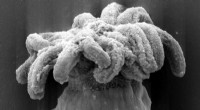
Yeast cells are single-celled eukaryotic organisms with a complex internal structure that allows them to perform essential functions. Here's a breakdown of the major parts and their roles:
1. Cell Wall:
* Function: Provides structural support and protection, maintains cell shape, and regulates the passage of molecules in and out of the cell.
* Composition: Composed primarily of glucans (polysaccharides) and mannans (proteins), along with small amounts of chitin.
2. Plasma Membrane:
* Function: Acts as a selective barrier, controlling the movement of substances into and out of the cell. It also plays a crucial role in cell signaling and communication.
* Composition: Composed of a phospholipid bilayer with embedded proteins.
3. Cytoplasm:
* Function: The gel-like substance that fills the cell, containing various organelles and enzymes essential for cellular processes.
* Composition: Water, dissolved salts, proteins, and other molecules.
4. Nucleus:
* Function: Contains the cell's genetic material (DNA), which is organized into chromosomes. It controls the cell's activities and directs protein synthesis.
* Composition: Enclosed by a double membrane called the nuclear envelope, containing chromatin (DNA and proteins), nucleolus (site of ribosome synthesis), and nucleoplasm (the fluid inside the nucleus).
5. Ribosomes:
* Function: Involved in protein synthesis. They read the genetic code from mRNA and assemble amino acids into protein chains.
* Composition: Made of ribosomal RNA (rRNA) and proteins.
6. Endoplasmic Reticulum (ER):
* Function: A network of interconnected membranes that serves as a transport system within the cell. It's involved in protein synthesis, modification, and transport, lipid synthesis, and detoxification.
* Types:
* Rough ER: Studded with ribosomes, involved in protein synthesis and modification.
* Smooth ER: Lacks ribosomes, involved in lipid synthesis, detoxification, and calcium storage.
7. Golgi Apparatus:
* Function: Modifies, sorts, and packages proteins and lipids produced in the ER. It also produces lysosomes and other vesicles.
* Composition: A stack of flattened, membrane-bound sacs called cisternae.
8. Vacuole:
* Function: Maintains cell turgor (internal pressure), stores water, nutrients, and waste products, and plays a role in cell growth and development.
* Composition: A large, fluid-filled sac surrounded by a membrane.
9. Mitochondria:
* Function: The "powerhouses" of the cell, responsible for cellular respiration and generating ATP (adenosine triphosphate), the primary energy source for the cell.
* Composition: Have their own DNA and ribosomes, enclosed by two membranes – an outer membrane and an inner membrane folded into cristae.
10. Lysosomes:
* Function: Contain enzymes that break down waste materials, cellular debris, and engulfed pathogens.
* Composition: Membrane-bound sacs filled with hydrolytic enzymes.
11. Peroxisomes:
* Function: Involved in various metabolic processes, including detoxification, lipid metabolism, and the breakdown of hydrogen peroxide.
* Composition: Small, membrane-bound organelles containing enzymes involved in these processes.
In addition to these main components, yeast cells also contain:
* Cytoskeleton: A network of protein filaments that provides structural support, facilitates cell movement, and helps with intracellular transport.
* Glycogen granules: Storage form of glucose, providing energy reserves for the cell.
* Fat globules: Store lipids for energy reserves and other cellular functions.
Understanding the different parts and their functions helps us appreciate the complexity and remarkable capabilities of a seemingly simple single-celled organism like yeast.