Here's a breakdown of what that means:
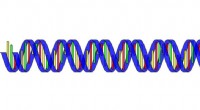
* DNA is a long, complex molecule that contains the genetic instructions for building and maintaining an organism. It's shaped like a twisted ladder, called a double helix.
* Genes are specific segments of this DNA sequence. Each gene contains instructions for a particular trait, like eye color, hair color, or height.
* Nucleotides are the building blocks of DNA. They are composed of three parts: a sugar molecule (deoxyribose), a phosphate group, and one of four nitrogenous bases: adenine (A), thymine (T), guanine (G), and cytosine (C).
* The order of these bases within a gene forms a code that determines the specific protein the gene will produce. Proteins are the workhorses of our cells, carrying out a wide variety of functions.
So, to summarize:
Genes are segments of DNA, which in turn is composed of nucleotides, and the order of these nucleotides within a gene dictates the protein it will produce.