1. Observation and Questioning:
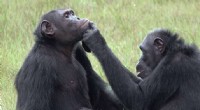
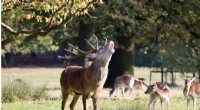
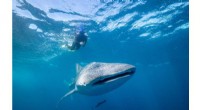
* Observation: Scientists start by observing the world around them, noticing patterns, anomalies, or unanswered questions.
* Questioning: These observations lead to questions. Why does something happen? How does something work? What are the relationships between different elements?
2. Gathering Information:
* Existing knowledge: Scientists research existing studies, theories, and data related to their question.
* Background research: They read scientific literature, consult experts, and analyze previous research.
3. Developing a Tentative Explanation:
* Inductive reasoning: Based on their observations and research, scientists use inductive reasoning to propose a tentative explanation for the observed phenomenon. This explanation is a potential answer to their question.
* Hypothesis formation: This tentative explanation is formalized into a hypothesis, a testable statement that predicts the outcome of an experiment or observation.
Characteristics of a Good Hypothesis:
* Testable: It must be possible to design an experiment or observation that can either support or refute the hypothesis.
* Falsifiable: It must be possible for the hypothesis to be proven wrong.
* Specific: It should clearly define the relationship between variables being investigated.
* Logical: It should be based on existing knowledge and sound reasoning.
Example:
Observation: You notice that plants in your garden seem to grow taller when they are watered regularly.
Question: Does regular watering affect plant growth?
Gathering information: You research the role of water in plant growth and find that water is essential for photosynthesis.
Hypothesis: Plants watered regularly will grow taller than plants that are not watered regularly.
Key Points:
* Hypothesis formation is an iterative process. It may involve refining and modifying the hypothesis based on further research and experimentation.
* A hypothesis is not a fact; it is a proposed explanation that requires testing and validation.
* Scientists use a variety of methods to test their hypotheses, including experiments, observations, and statistical analysis.
Let me know if you'd like more detail on any of these steps or have specific examples in mind!