1. Observation and Question:
* Data Gathering: Initial observations often involve gathering data about a phenomenon. This data can be qualitative (descriptive) or quantitative (numerical). For example, observing that a plant grows taller in the sun than in the shade involves gathering data about the plant's height.
* Identifying Patterns: Observations often lead to identifying patterns or inconsistencies, prompting researchers to formulate questions about the underlying causes.
2. Hypothesis:
* Predictions: Data guides the formulation of a hypothesis, a testable explanation for the observed pattern. The hypothesis predicts how the data would change under specific conditions. For instance, a hypothesis might predict that the plant grows taller in the sun due to increased sunlight exposure.
3. Experiment:
* Testing the Hypothesis: The experiment is designed to test the hypothesis by manipulating variables and collecting data. Data is collected throughout the experiment to measure the effects of the manipulated variables.
* Controlled Variables: Data collection focuses on both dependent (measured) and independent (manipulated) variables, while controlling other factors that might influence the outcome.
4. Analysis:
* Interpreting Results: The collected data is analyzed to determine if the results support or refute the hypothesis. Statistical analysis is often used to identify significant trends and relationships within the data.
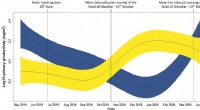
* Visualizing Data: Data visualization techniques (graphs, charts) help scientists understand and communicate patterns in the data.
5. Conclusion:
* Supporting or Refuting the Hypothesis: Based on the data analysis, a conclusion is drawn about whether the hypothesis is supported or rejected.
* New Questions: Data analysis often leads to new questions and further investigations.
6. Communication:
* Sharing Findings: Scientists publish their findings, including the data and analysis methods, to share their results with the scientific community.
* Reproducibility: Sharing data allows other researchers to replicate the experiment and verify the findings, ensuring the validity and reliability of scientific knowledge.
In essence, data is the fuel that drives the scientific method, enabling us to explore, understand, and explain the world around us.