Here are a few contenders:
* Biology: This field studies living organisms and encompasses an enormous range of disciplines, including:
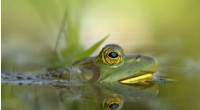
* Zoology: The study of animals
* Botany: The study of plants
* Ecology: The study of interactions between organisms and their environment
* Genetics: The study of heredity and variation
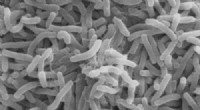
* Microbiology: The study of microorganisms
* Biochemistry: The study of the chemistry of living organisms
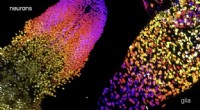
* Neuroscience: The study of the nervous system
* Immunology: The study of the immune system
* Evolutionary biology: The study of the origin and diversification of life
* Chemistry: The study of matter and its properties includes:
* Organic chemistry: The study of carbon-containing compounds
* Inorganic chemistry: The study of compounds that do not contain carbon
* Analytical chemistry: The study of the composition and structure of matter
* Physical chemistry: The study of the physical principles underlying chemical phenomena
* Biochemistry: The study of the chemistry of living organisms
* Physics: The study of the fundamental constituents of the universe and their interactions includes:
* Classical mechanics: The study of motion and forces
* Thermodynamics: The study of heat and energy
* Electromagnetism: The study of electricity and magnetism
* Optics: The study of light
* Quantum mechanics: The study of the behavior of matter at the atomic and subatomic levels
* Astrophysics: The study of the universe and celestial objects
* Nuclear physics: The study of the nucleus of the atom
* Particle physics: The study of the fundamental particles that make up matter
* Condensed matter physics: The study of the properties of matter in its condensed phases (solid, liquid, and plasma)
Important Notes:
* Many fields are interconnected, such as biochemistry being a bridge between biology and chemistry.
* New fields emerge constantly, like computational biology, which uses computer science to solve biological problems.
* It's ultimately up to your definition of "branch" and how you categorize the knowledge.
Therefore, it's more accurate to say that science is a vast and interconnected network of knowledge, rather than a single field with a definitive "most branches."