1. Observation
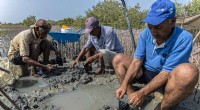
Scientists start by making observations about the natural world. These observations can be qualitative( descriptive) or quantitative ( numerical). For example, a scientist may observe that certain flowers bloom in the spring or that the average temperature in a certain region is increasing over time.
2. Indentifying a Problem or Question
Based on their observations, scientists identify a specific problem or question that they want to investigate further. The question should be clear, focused and able to be tested through scientific methods.
3. Forming a Hypothesis
A hypothesis is a proposed explanation or prediction for the observed phenomenon. It is based on the scientists prior knowledge and the initial observation. A hypothesis should be specific testable and supported by evidence.
4. Designing and Conducting Experiments
To test the hypothesis, scientist design and conduct experiments. Experiments involve manipulating one or more variable (independent variable) and measuring the effects of those changes on another variable (dependent variable). The scientist controls other factors( control variables) to ensure that the changes in the dependent variable are caused by the independent variable.
5. Collecting and Analysing Data
Scientist collect data from their experiments. This data may be qualitative( descriptive information) or quantative( numerical information). They use various statistical techniques to analyse the data and draw conclusions about the effects of the independent variable one the dependent variable.
6. Interpreting the Results
Scientist interpret the results of the experiments by comparing the observed data with the predicted outcomes based on the hypothesis. They assess whether the data supports or refutes the hypothesis.
7.Drawing Conclusions
Based on the analysis of the data and the interpretation of the results, scientists draw conclusions about their original hypothesis. They determine whether the hypothesis was supported or not.
8. Communicating Findings
Scientist communicate their findings through scientific publications, conferences and presentations. Peer review is an essential component of the scientific process, where other scientist review and critique research papers before publication, ensuring the accuracy and validity of the findings.
9. Replicating Studies
To ensure the reliability and validity of the findings, other scientists often replicate studies. Replication involves conducting similar experiments or studies by independent researchers to verify and reproduce the results.
Remember, the scientific method is an iterative process, and scientist often refine their hypothesis based on new evidence and repeat the process to further improve their understanding of the natural world.