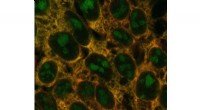
The cell theory is a fundamental concept in biology that describes the basic unit of life as the cell. It was formulated in the mid-19th century by scientists Theodor Schwann, Matthias Schleiden, and Rudolf Virchow. Their work built upon observations and discoveries made by earlier researchers, including Robert Hooke.
Zacharias Janssen's invention of the microscope, although not specifically tied to the development of the cell theory, provided a crucial tool for scientists to make detailed observations of cells. The microscope allowed researchers like Hooke and others to examine the structure and components of cells, paving the way for the eventual understanding of cell biology and the formulation of the cell theory.