When an animal cell is placed in pure water (hypotonic solution), it undergoes a process called cytolysis. Cytolysis occurs because the concentration of solutes inside the cell is higher than the concentration of solutes in the surrounding water. As a result, water moves into the cell by osmosis, causing the cell to swell and eventually burst. The movement of water into the cell is driven by the concentration gradient of solutes, with water moving from areas of low solute concentration (pure water) to areas of high solute concentration (the inside of the cell).
Plant cells in pure water:
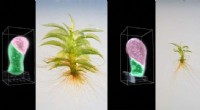
Plant cells do not undergo cytolysis in pure water because they have a cell wall. The cell wall provides structural support to the cell and prevents it from bursting when water moves into the cell by osmosis. The cell wall is made of cellulose, a strong and rigid polysaccharide. It allows water to enter the cell, but it resists the expansion of the cell. As a result, plant cells can maintain their shape and turgidity in pure water.