1. Chloroplasts:
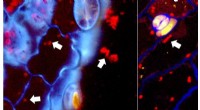
- Chloroplasts are organelles found in plant cells, primarily in the leaves.
- They contain chlorophyll, a green pigment that captures light energy from the sun.
- Chloroplasts are the sites where the light reactions of photosynthesis take place, converting light energy into chemical energy.
2. Leaves:
- Leaves are the primary organs responsible for photosynthesis.
- They have a large surface area to capture sunlight efficiently.
- The internal structure of leaves, including the arrangement of cells and chloroplasts, is optimized for light absorption and photosynthesis.
3. Stomata:
- Stomata are tiny pores found on the surface of leaves.
- They allow the exchange of gases between the plant and the atmosphere, including the uptake of carbon dioxide (CO2) and the release of oxygen (O2).
4. Vascular Tissues:
- Vascular tissues, such as xylem and phloem, transport water, minerals, and nutrients throughout the plant.
- They play a crucial role in supplying the leaves with the necessary resources for photosynthesis.
5. Root System:
- The root system of plants absorbs water and minerals from the soil.
- Water is essential for photosynthesis as it is involved in various processes, including the transport of nutrients and the regulation of leaf temperature.
6. Light-Dependent Reactions:
- The light-dependent reactions of photosynthesis occur in the thylakoid membranes of chloroplasts.
- They involve the capture of light energy by chlorophyll, the splitting of water molecules, and the generation of ATP and NADPH, energy-rich molecules used in the subsequent reactions.
7. Calvin Cycle (Light-Independent Reactions):
- The Calvin cycle, also known as the light-independent reactions, takes place in the stroma of chloroplasts.
- It utilizes the ATP and NADPH produced during the light-dependent reactions to fix CO2 into organic molecules, primarily glucose, using the carbon from CO2 and the hydrogen from NADPH.
8. Electron Transport Chain:
- The electron transport chain is a series of protein complexes embedded in the thylakoid membranes.
- It facilitates the transfer of electrons from NADPH and water, leading to the generation of ATP through a process called oxidative phosphorylation.
Overall, the structures and functions of plants, such as chloroplasts, leaves, stomata, vascular tissues, and the root system, work together to support and facilitate photosynthesis. This process converts light energy into chemical energy, producing oxygen and the organic molecules necessary for plant growth and survival, while also contributing to the overall balance of gases in the atmosphere.