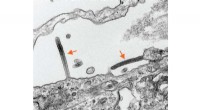
Here is a breakdown of the structures and components found in virions:
1. Nucleic Acid Core:
- The central part of a virion contains the viral genetic material, which is either single-stranded or double-stranded DNA or RNA.
- The nucleic acid core is packaged in various ways depending on the virus type. Some viruses have their nucleic acid loosely organized within the capsid, while others have it enclosed in a protein shell or nucleoprotein complex.
2. Capsid:
- The capsid is the protein coat that encloses and protects the viral nucleic acid core. It consists of multiple protein subunits called capsomers.
- Capsid structures can vary greatly among different viruses. Some have simple helical or icosahedral symmetry, while others are more complex in shape.
- The capsid plays crucial roles in viral attachment to host cells, penetration, and uncoating.
3. Envelope (in some viruses):
- Enveloped viruses possess an additional outer layer called the viral envelope. The envelope is derived from the host cell membrane during the viral budding process.
- Embedded in the envelope are viral envelope proteins, such as hemagglutinin and neuraminidase in influenza viruses, which are essential for viral entry into the host cell.
- The envelope provides additional protection and aids in evading host immune responses.
4. Membrane Proteins (in enveloped viruses):
- The viral envelope contains specific membrane proteins responsible for viral attachment and fusion with the host cell membrane.
- These membrane proteins, such as glycoproteins, interact with receptors on the host cell surface, facilitating the virus's entry into the host cell.
5. Tail Fibers and Base Plate (in some viruses):
- Some viruses, such as bacteriophages (viruses that infect bacteria), possess specialized tail fibers and a base plate.
- Tail fibers aid in the virus's attachment to specific receptors on the bacterial cell surface. The base plate then contracts, driving the injection of viral DNA into the bacterial cell.
6. Spikes (in some viruses):
- Certain viruses, like coronaviruses, have prominent spikes projecting from their surface.
- These spikes, formed from glycoproteins, play crucial roles in viral attachment and entry into host cells.
7. Nucleocapsid:
- The nucleocapsid refers to the combination of the nucleic acid core and the capsid. It represents the complete internal structure of the virus.
It's important to note that different virus families have variations in their structures, and not all viruses possess all of the components mentioned above. The complexity and diversity of viral structures reflect their adaptation to different host environments and infection mechanisms.