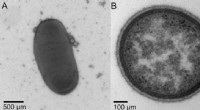
An amoeba is a single-celled organism, typically 0.1 to 0.5 millimeters in diameter. It has a flexible cell membrane and changes shape as it moves. Amoebas are found in freshwater, saltwater, and soil.
A compound light microscope uses two lenses, an objective lens and an eyepiece lens, to magnify an object. The objective lens is located at the bottom of the microscope and the eyepiece lens is located at the top. The light from the light source passes through the objective lens, which magnifies the specimen. The magnified image is then projected onto the eyepiece lens, which further magnifies the image.
A compound light microscope can magnify an object up to 1,000 times. This is sufficient magnification to observe an amoeba in detail.