1. Generation of Electrical Signals (Action Potential):
- A nerve cell receives signals from other nerve cells or sensory receptors through specialized structures called dendrites.
- These signals are integrated, and if the net input reaches a certain threshold, an electrical impulse called an action potential is generated.
- The action potential starts at the axon hillock, the beginning segment of the axon, and travels along the length of the axon.
2. Transmission of Electrical Signals:
- The action potential is propagated along the axon, which is a long, slender projection of the nerve cell.
- The axon is covered with a fatty substance called myelin, which acts as an insulator and helps speed up the propagation of the action potential.
- When the action potential reaches the end of the axon, it triggers the release of chemical messengers called neurotransmitters into the synaptic cleft.
3. Synaptic Transmission:
- The synaptic cleft is a tiny gap between the transmitting neuron (presynaptic neuron) and the receiving neuron (postsynaptic neuron).
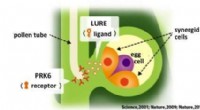
- Neurotransmitters are released into the synaptic cleft and diffuse across to bind to specific receptors on the postsynaptic neuron.
4. Chemical Signal Reception and Response:
- The binding of neurotransmitters to receptors on the postsynaptic neuron causes an alteration in the electrical potential of the postsynaptic neuron.
- This change in electrical potential can either excite or inhibit the postsynaptic neuron.
- If the postsynaptic neuron reaches its threshold, it will generate its own action potential, which can then propagate further to other neurons.
5. Recycling and Reuptake:
- After neurotransmitters are released, they are quickly broken down or taken back up by the presynaptic neuron through a process called reuptake.
- This process ensures that the neurotransmitter concentration in the synaptic cleft is regulated, and the system is ready for the next signal transmission.
6. Integration of Signals:
- Each nerve cell receives input from multiple other nerve cells, resulting in a complex integration of signals.
- The neuron sums up the excitatory and inhibitory inputs, and if the net effect reaches a certain threshold, it fires an action potential.
- This integrative process allows nerve cells to perform computations and make decisions based on the incoming information.
In summary, nerve cells communicate by converting electrical signals (action potentials) into chemical signals (neurotransmitters) at the synapse, enabling the transmission and integration of information within a complex network of neurons.