Epithelial tissue forms the lining of organs and cavities and covers the body's outer surface.
Connective tissue supports and connects other tissues and organs together.
Muscle tissue contracts and relaxes to produce movement.
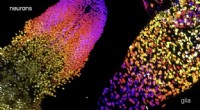
Nervous tissue transmits signals between different parts of the body.
Each type of tissue is composed of different types of cells that are specialized to perform specific tasks. For example, epithelial cells produce secretions, connective tissue cells produce collagen and elastin fibres, muscle cells contract and relax, and nervous tissue cells transmit electrical signals.
Tissues are organized into organs, which are groups of tissues that work together to perform a specific function. For example, the stomach is an organ that is made up of epithelial tissue, connective tissue, muscle tissue, and nervous tissue. Organs are organized into systems, which are groups of organs that work together to perform a specific function. For example, the digestive system is a system that is made up of the stomach, intestines, liver, and gallbladder.