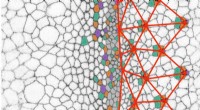
One major difference is the presence of a cell wall in plant cells. The cell wall is a rigid structure that surrounds the cell membrane and provides support and protection. During cell division, the cell wall must be broken down in order for the cell to divide. This is accomplished by a structure called the phragmoplast, which forms a cell plate that separates the two daughter cells. In animal cells, there is no cell wall, so the cell membrane simply pinches in to divide the cell into two.
Another difference between plant and animal cell division is the formation of the spindle apparatus. The spindle apparatus is a structure that helps to organize and separate the chromosomes during cell division. In animal cells, the spindle apparatus is composed of microtubules, which are long, thin protein filaments. In plant cells, the spindle apparatus is also composed of microtubules, but it is also reinforced by a structure called the phragmoplast. The phragmoplast helps to ensure that the spindle apparatus is properly positioned and that the chromosomes are evenly distributed to the daughter cells.
Finally, plant and animal cells differ in the way that they divide their cytoplasm. In animal cells, the cytoplasm is divided by a process called cytokinesis, which occurs at the end of telophase. During cytokinesis, a contractile ring of actin filaments forms around the center of the cell and pinches the cell membrane inward, dividing the cell into two. In plant cells, cytokinesis occurs by the formation of a cell plate, which is a new cell wall that forms between the two daughter cells. The cell plate is formed by the phragmoplast, and it eventually fuses with the cell membranes of the two daughter cells, completing the process of cell division.
In summary, the process of cell division is similar in plant and animal cells, but there are some key differences, such as the presence of a cell wall in plant cells, the formation of the spindle apparatus, and the way that the cytoplasm is divided.