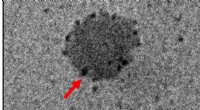
Generally, Gram-positive bacteria retain the crystal violet dye due to the presence of a thick layer of peptidoglycan in their cell wall. This layer is responsible for the positive charge, allowing these bacteria to retain the crystal violet-iodine complex formed during the staining process. Subsequently, the Gram-positive cells appear dark purple or blue when observed under a microscope.
On the other hand, Gram-negative bacteria possess a thinner peptidoglycan layer and an additional outer membrane. This difference in cell wall structure leads to a loss of the crystal violet dye during the alcohol wash step of the Gram staining protocol. Consequently, Gram-negative bacteria do not retain the crystal violet-iodine complex and subsequently take up the counterstain, typically safranin. As a result, Gram-negative cells appear red or pink when observed under the microscope.
While the Gram stain procedure effectively differentiates between Gram-positive and Gram-negative bacteria, there are a few exceptions where the procedure might produce unexpected results. These exceptions include:
Acid-fast bacteria: Some bacteria, such as those belonging to the genus Mycobacterium, have a waxy cell wall that prevents the crystal violet dye from penetrating the cells. As a result, these bacteria are not easily visualized with the Gram stain procedure and require special staining techniques, like the Ziehl-Neelsen stain, to be observed.
Gram-variable bacteria: Certain bacterial species may exhibit variations in their Gram-staining characteristics depending on their growth conditions or developmental stages. For instance, some bacteria might be Gram-positive in certain stages of their life cycle and Gram-negative in others.
Unusually stained bacteria: Rarely, some bacterial species might display unusual Gram-staining results due to unique cell wall compositions or variations in their chemical composition. These bacteria might appear partially stained or intermediate in their staining reaction, making their classification as either Gram-positive or Gram-negative challenging.
In summary, the Gram stain procedure is a reliable technique that effectively differentiates between most Gram-positive and Gram-negative bacteria based on differences in their cell wall structures. However, there are exceptions where certain bacterial species might not conform to the typical Gram-positive or Gram-negative staining patterns, requiring alternative staining methods or detailed analysis for accurate classification.