1. Environmental Pressures: One widely accepted hypothesis suggests that hemispheric specialization evolved as a result of selective pressures imposed by the environment. As humans evolved and faced increasingly complex challenges, the brain's computational resources may have been optimized by specializing one hemisphere for certain functions and the other hemisphere for complementary functions, allowing for greater efficiency and adaptability.
2. Evolutionary Trade-Offs: Hemispheric specialization could have arisen as a result of evolutionary trade-offs. By dedicating specific regions of the brain to particular tasks, the brain might have become more efficient at processing and integrating information, even though it made the brain more vulnerable to damage to those specialized areas.
3. Neural Connectivity Constraints: The structure of the brain's neural connections may have played a role in the development of hemispheric specialization. The way the hemispheres are interconnected through the corpus callosum and other neural pathways could have favored certain types of information processing in specific hemispheres.
4. Modularity and Flexibility: Hemispheric specialization might have evolved as a way to increase the brain's modularity and flexibility. By segregating certain functions to specific hemispheres, the brain could operate in parallel and switch between different tasks more easily, leading to greater cognitive adaptability.
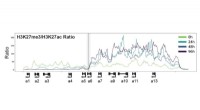
5. Genetic and Developmental Factors: Genetic variations and developmental processes may have contributed to the emergence of hemispheric specialization. The expression of specific genes or developmental mechanisms might have favored the specialization of certain neural circuits in each hemisphere.
6. Brain Size and Energy Efficiency: Some theories suggest that as the human brain expanded in size, it became energetically efficient to segregate functions between hemispheres, reducing the energy requirements for long-distance communication between brain regions.
It is important to note that these theories are not mutually exclusive, and several factors likely contributed to the evolution of hemispheric specialization. Additionally, the relative importance of these factors and the specific mechanisms involved are still topics of ongoing research in the fields of neuroscience, evolutionary biology, and psychology.