1. Asexual Reproduction:
- Budding: In budding, a new organism develops as an outgrowth or "bud" from the parent organism. The bud eventually detaches and becomes an independent individual. Examples include yeast and hydra.
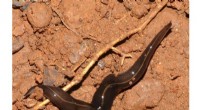
- Fragmentation: Fragmentation occurs when a parent organism breaks into multiple fragments, and each fragment can grow into a new individual. Examples include some worms, starfish, and plants like ferns.
- Fission: Fission is the division of a parent organism into two or more offspring of roughly equal size. Examples include amoeba and paramecium.
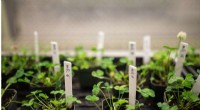
- Vegetative Propagation: Vegetative propagation involves the production of new plants from specialized structures such as stems, leaves, or roots. This method is common in plants and allows for rapid reproduction.
2. Sexual Reproduction:
- Sexual Reproduction involves the fusion of gametes (sex cells) to produce offspring that inherit genetic material from both parents. There are two main types of sexual reproduction:
a) Fertilization with External Development:
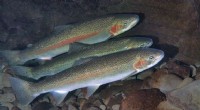
- In this type of sexual reproduction, fertilization (the fusion of sperm and egg) occurs outside the body of the parent organism. The fertilized zygote then develops externally, usually in water. Examples include many aquatic species like sea urchins and fish.
b) Fertilization with Internal Development (Viviparity):
- Here, fertilization occurs internally within the female's body. The fertilized egg develops inside the parent, receiving nourishment from the parent's body. Offspring are born as live young. Examples of viviparous animals include mammals, some reptiles, and certain fish species.
3. Alternation of Generations:
Some multicellular organisms, like plants and some algae, exhibit alternation of generations. This is a life cycle that involves both asexual (e.g., spore production) and sexual (e.g., gamete production) reproduction phases. It alternates between a diploid sporophyte phase and a haploid gametophyte phase.
It's important to note that the type of reproduction can vary within different groups of multicellular organisms, and even within the same group, different species may have different reproductive strategies.