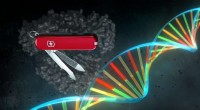
- Mutations are random changes in the DNA sequence of an organism.
- They can occur naturally or be induced by environmental factors such as radiation or chemicals.
- Mutations can have a variety of effects on an organism, from being completely harmless to causing serious diseases or even death.
Variation:
- Variation is the difference in traits between individuals within a population. Variation is essential for evolution because it allows for natural selection to act on different traits.
- Variation can be caused by a number of factors, including mutations, genetic recombination, and environmental influences.
Adaptation:
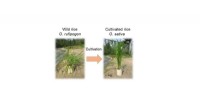
- Adaptation is the process by which organisms become better suited to their environment.
- Adaptations can be physical, behavioural or physiological.
- Adaptations are the result of natural selection acting on genetic variation within a population.
- Over time, individuals with beneficial adaptations are more likely to survive and reproduce, passing on their genes to the next generation. This leads to a gradual increase in the frequency of beneficial adaptations in the population.
Relationship between mutations, variation, and adaptation:
Mutations are the ultimate source of variation in populations. Without mutations, there would be no new genetic material for natural selection to act on, and evolution would not occur.
Variation is essential for adaptation. Organisms that are better adapted to their environment are more likely to survive and reproduce, passing on their genes to the next generation. Over time, this can lead to significant changes in a population's genetic makeup.
Mutations provide the raw material for variation, which is essential for adaptation. Without mutations, there could be no evolution.