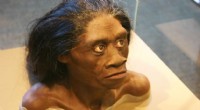
1. All living things are related to each other. Scientists have evidence from DNA, fossils, and other sources that all living things are descended from a common ancestor that lived about 3.5 billion years ago.
2. Evolution occurs by natural selection. Natural selection is the process by which organisms that are better adapted to their environment are more likely to survive and reproduce. This process leads to the gradual evolution of populations over time.
3. Evolution is a slow process. Although evolution can occur very rapidly in some cases, most evolutionary changes occur over long periods of time. For example, it took hundreds of millions of years for the first fish to evolve into the first land animals.
4. Evolution is not a linear process. Evolution does not always proceed in a straight line. There can be times when populations evolve rapidly, followed by times when they evolve slowly or not at all.
5. Evolution is not goal-directed. There is no predetermined goal or endpoint for evolution. Evolution simply responds to the environmental conditions that organisms face.
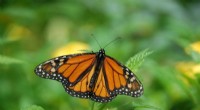
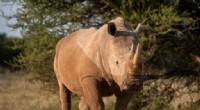
6. Evolution has produced the amazing diversity of life that we see on Earth today. Over the course of billions of years, evolution has produced the millions of different species of plants and animals that inhabit the Earth.
Evolution is a well-supported scientific theory that has revolutionized our understanding of the natural world. It is a fundamental concept in biology and is essential for understanding the history of life on Earth.