- Computers in biology help researchers gather and manage extensive data, including DNA sequences, gene expression profiles, protein interactions, and more.
- Databases like GenBank and UniProt facilitate data storage and retrieval.
Bioinformatics and Sequence Analysis:
- Computers are crucial for analyzing biological sequences, such as DNA, RNA, and proteins.
- Bioinformatics tools allow sequence alignments, protein folding prediction, and identification of functional motifs.
Genome Sequencing and Assembly:
- Computers are essential in genome sequencing projects, where billions of DNA sequences are generated and assembled into complete genomes.
Molecular Modeling, Simulations, and Drug Discovery:
- Computational tools enable the modeling and simulations of biomolecules, proteins, and drug-target interactions, facilitating drug design and discovery.
Microscopy and Image Analysis:
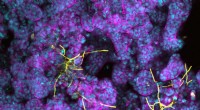
- Microscopy techniques, such as electron microscopy and light microscopy, generate massive image datasets.
- Computers assist in image processing, analysis, and 3D reconstruction of cellular structures.
Evolutionary Biology:
- Computational methods aid in studying evolutionary relationships among species, constructing phylogenetic trees, and analyzing comparative genomics.
Population Genetics:
- Computers help analyze population genetics data to understand genetic diversity, population structures, and gene flow patterns.
Systems Biology and Network Analysis:
- Computers facilitate the analysis of complex biological networks, uncovering molecular interactions, signaling pathways, and regulatory mechanisms within cells.
Scientific Communication:
- Computers enable researchers to create scientific presentations, publications, and collaborate using online platforms and software.
Educational Tools:
- Interactive software and online resources enhance biology education with simulations, animations, and visualizations of biological processes.